
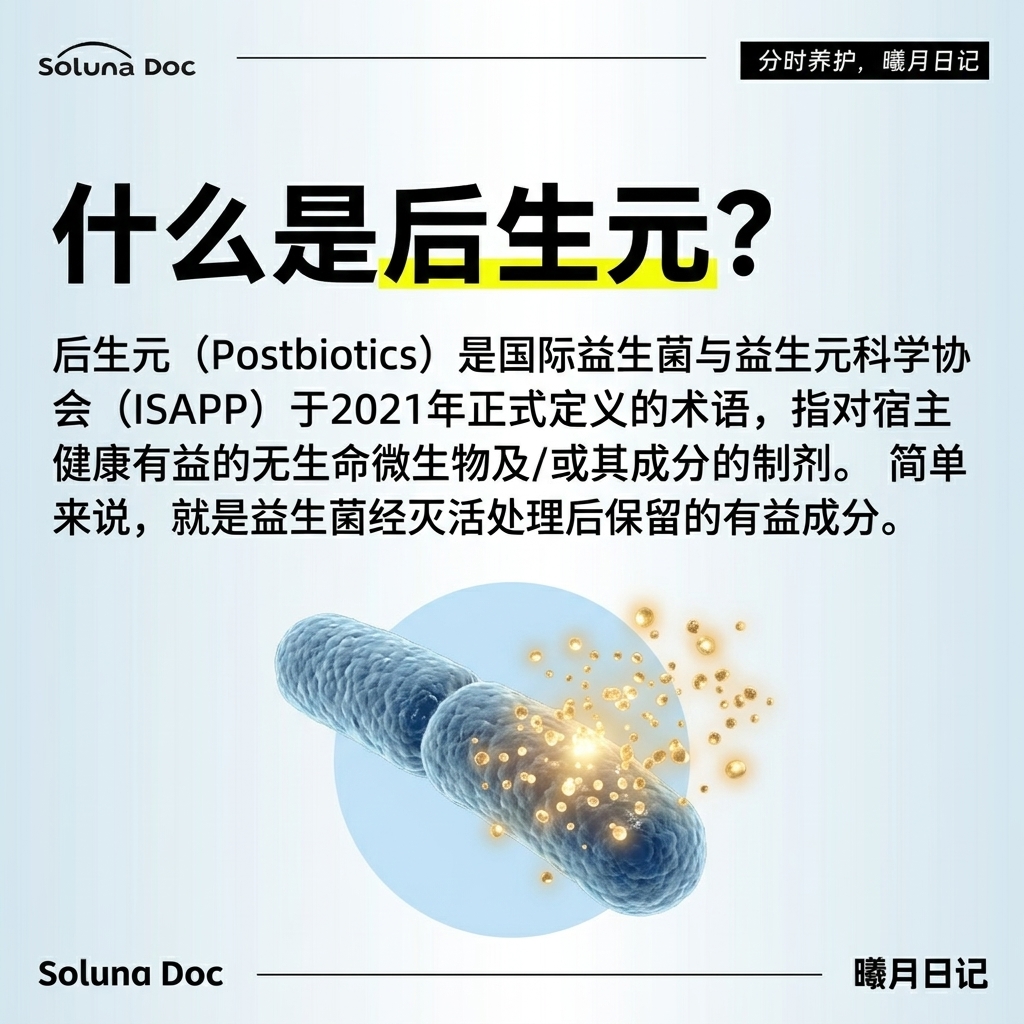


Postbiotics is a term formally defined in 2021 by the International Scientific Association for Probiotics and Prebiotics (ISAPP) as "a preparation of inanimate microorganisms and/or their components that confers a health benefit on the host" [1]. Put simply, they are microorganisms that have been inactivated, together with their components. They have three defining features: they are obtained through a specific inactivation process that preserves cell structures and metabolites; they tolerate heat and acid and keep at room temperature without refrigeration; and they do not need to stay alive.
The Discovery and Development of Postbiotics
Research on postbiotics dates back to the early 20th century. In 2021, ISAPP published the formal scientific definition of postbiotics [1], marking the start of a more standardized field. As inactivation processes have matured, postbiotic products have grown quickly worldwide [3].
Main Types and Components of Postbiotics
Based on their source and composition, postbiotics fall into the following main categories [3]:
- Inactivated microorganisms: whole cells inactivated by heat or other processes, such as inactivated lactobacilli and bifidobacteria, which retain cell-wall structures such as peptidoglycan and lipoteichoic acid.
- Yeast fermentates: such as EpiCor®, produced by whole-cell fermentation of Saccharomyces cerevisiae followed by inactivation, containing beta-glucans, mannan-oligosaccharides, polyphenols and other components [2].
- Short-chain fatty acids: such as butyrate and propionate, metabolites produced when microorganisms ferment dietary fiber.
- Cell-wall fragments: such as yeast beta-glucan and other cell-wall polysaccharides.
Postbiotics vs Probiotics vs Prebiotics: A Side-by-Side Comparison
| Dimension | Probiotics | Prebiotics | Postbiotics |
|---|---|---|---|
| Definition | Live beneficial microorganisms | Food ingredients that feed probiotics | Inactivated microorganisms and their components |
| Representative examples | LGG, Bb-12 | Fructooligosaccharides, stachyose | Inactivated cells, EpiCor |
| Live bacteria required? | ✅ Yes | ❌ No | ❌ No |
| Stability | Lower | High | Very high |
| Storage | Usually refrigerated | Room temperature | Room temperature |
How Stable Are Postbiotics?
Postbiotics do not need to stay alive, so they tolerate heat and acid and keep in a cool, dry place at room temperature without refrigeration [3]. Inactivated cells can no longer multiply.
How to Choose a Postbiotic Drink Mix
When choosing a postbiotic drink mix (solid beverage), we suggest evaluating it across three dimensions:
- Check the ingredient list: are strains named down to the strain code (such as Lactobacillus rhamnosus GG or Bifidobacterium animalis subsp. lactis Bb-12), with an amount for each?
- Check the standard and license: the pack should show the product standard (GB/T 29602 for solid beverages in China) and a food production license number starting with SC.
- Check who it is for and how to take it: look for the suitable age, serving size and water temperature on the label.
Frequently Asked Questions About Postbiotics
Postbiotics is a term formally defined by the International Scientific Association for Probiotics and Prebiotics (ISAPP) in 2021, referring to preparations of inanimate microorganisms and/or their components that confer a health benefit on the host. Simply put, they are the beneficial components retained after probiotics are inactivated, including cell structures and metabolites.
Probiotics are live microorganisms that must stay alive through processing and storage; postbiotics are inactivated microorganisms and their components, which do not need to stay alive. Postbiotics tolerate heat and acid and need no refrigeration, so they keep more stably in storage.
Yes. Postbiotics contain inactivated ("dead") microorganisms and their metabolites. Inactivated cells keep structures such as the cell wall but can no longer multiply, so they do not need to stay alive in storage.
The suitable age depends on the product label. Soluna Doc postbiotic drink mixes are for children aged 3 and up.
Take 1-2 stick packs at a time. They can be taken directly by mouth (dry), or dissolved in 100 ml of warm water (below 40°C) and stirred until even. Avoid using water that is too hot, so as not to damage the live probiotic components.
No. One of the core advantages of postbiotics is their high stability — heat-tolerant, acid-tolerant and shelf-stable. Simply store them in a cool, dry place at room temperature. This is a key advantage over traditional probiotics.
Postbiotic drink mixes are ordinary foods; take them as directed on the label. Do not take them if you are allergic to any listed ingredient, and if you feel unwell afterwards, stop and consult a doctor.
Three things: whether the ingredient list names specific strains and amounts; whether the pack shows the product standard and an SC food production license number; and whether the suitable age and directions are clear.
Yes. Probiotics, prebiotics and postbiotics are three different kinds of ingredients, and many products combine them — each Soluna Doc stick contains all three.
Timing is flexible. Soluna Doc comes as two sticks: the Sun Stick for 9:00 in the morning and the Moon Stick for 21:00 in the evening.
Discover the Soluna Doc Postbiotic Drink Mix
14 probiotic strains per stick (including 2 imported strains) + 3 prebiotics + EpiCor postbiotic — one stick in the morning, one in the evening
View Product Details →References
- Salminen S, et al. "The International Scientific Association of Probiotics and Prebiotics (ISAPP) consensus statement on the definition and scope of postbiotics." Nat Rev Gastroenterol Hepatol. 2021;18(9):649-667.
- Jensen GS, et al. "EpiCor Fermented Product: Characterization of a Novel Health Supplement." J Agric Food Chem. 2013;61(42):10026-10034.
- Aguilar-Toalá JE, et al. "Postbiotics: An evolving term within the functional foods field." Trends Food Sci Technol. 2018;75:105-114.
- Szajewska H, Kołodziej M. "Systematic review with meta-analysis: Lactobacillus rhamnosus GG for treating acute gastroenteritis in children." Aliment Pharmacol Ther. 2015;41(6):563-572.
- Vinderola G, et al. "The non-bacterial world within the gut: From microbes to yeasts, their role in health and disease." Front Microbiol. 2022;13:1060224.
- Wegh CAM, et al. "Postbiotics and Their Potential Applications in Early Life Nutrition." Nutrients. 2019;11(4):843.