
A common piece of advice is to eat more naturally fermented foods such as kimchi, yogurt, miso, natto and fermented vegetables. But if cooking kills the live bacteria, is there any point in eating them cooked? The answer: the value of fermented foods goes beyond "live probiotics".
First, One Key Fact
High heat does inactivate most probiotics, so if you want live cultures, choose fermented foods eaten raw (such as homemade kimchi or unsweetened yogurt). Even after cooking, though, the changes fermentation made remain [3], for the following reasons.
1. Heat-inactivated bacteria and their metabolites remain
Postbiotics are the key to this question [1]. After probiotics are inactivated by heat, their cell-wall components, metabolites and peptides remain, and these substances are heat-stable [4].
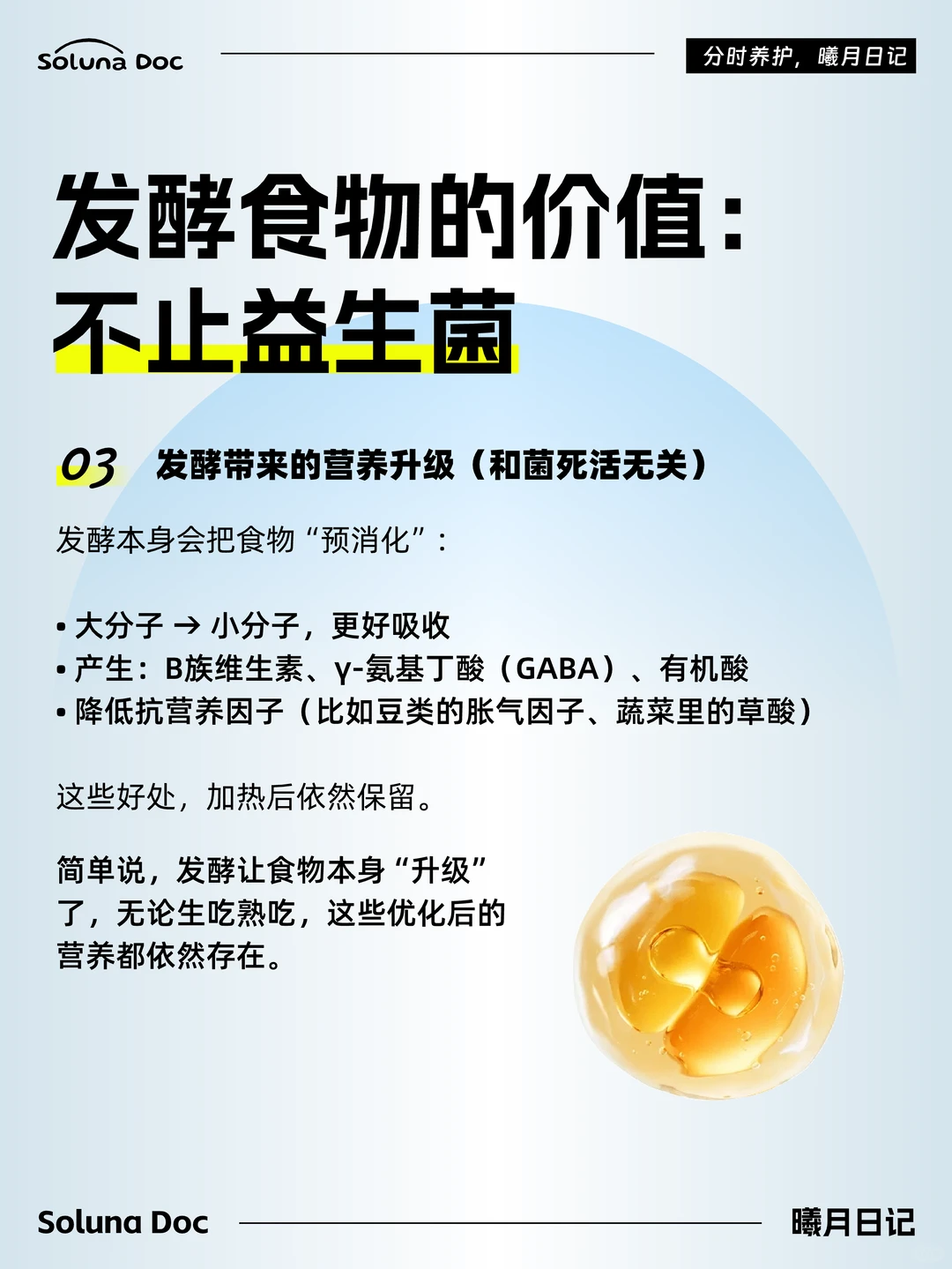
2. Fermentation Upgrades Nutrition — and Heat Doesn't Destroy It
During fermentation, microorganisms deeply break down and transform the raw ingredients, creating entirely new nutrients — most of which are heat-stable [2]:
- Produces short-chain fatty acids and other organic acids [5]
- B vitamins and vitamin K2 are synthesized, along with other nutrients the body needs
- Breaks large proteins and carbohydrates down into small peptides and amino acids and other smaller molecules
- Breaks down anti-nutrients such as phytic acid and lectins in the food
In short, fermentation "upgrades" the food itself. Whether you eat it raw or cooked, these improved nutrients are still there.
3. Fermentation Reshapes Food into Quality Prebiotics
Fermentation changes the structure of dietary fiber in food, producing prebiotic-type components that beneficial gut bacteria can use [2].
💡 A Smarter Way to Eat Fermented Foods
- Eat raw for live cultures: homemade kimchi, unsweetened yogurt, kefir, pickles and similar
- Cooked is fine too: miso soup, natto, fermented soy products and cooked sauerkraut keep the changes fermentation made
- Know the difference: smoked meat, cured bacon and sausages are processed meats, not naturally fermented foods, and are high in salt
Frequently Asked Questions About Fermented Foods
Traditional steamed buns are leavened with yeast, but after steaming they mainly gain a soft texture; their nutrition comes mostly from the carbohydrates themselves, which makes them quite different from fermented foods like kimchi or yogurt.
Fermented bean curd is a fermented soy product, similar to natto and douchi. Mold fermentation gives it metabolites and enzymes that remain when it is cooked. It is usually high in sodium, so choose a low-salt version and eat it in moderation.
They are different. Suan cai (sauerkraut) is naturally fermented by lactic acid bacteria and contains metabolites produced by fermentation, while traditional salted pickles are mainly preserved with salt and are not necessarily fermented. Tell naturally fermented products apart from high-salt pickles when choosing.
Rice wine and sweet fermented rice (jiuniang) are fermented foods made from glutinous rice fermented with a starter culture. They contain fermentation metabolites and some postbiotic components. Note, however, that store-bought jiuniang is usually high in sugar and contains a small amount of alcohol, so children and certain groups should be cautious about eating it.
Shelf-stable yogurt is pasteurized after fermentation, so its live cultures are killed and it can be stored at room temperature. Its nutrition comes mainly from the dairy itself, such as protein and calcium. If you want live cultures, choose refrigerated live-culture yogurt.
Discover the Soluna Doc Postbiotic Drink Mix
14 probiotic strains per stick (including 2 imported strains) + 3 prebiotics + EpiCor postbiotic — one stick in the morning, one in the evening
View Product Details →References
- Salminen S, et al. "The International Scientific Association of Probiotics and Prebiotics (ISAPP) consensus statement on the definition and scope of postbiotics." Nat Rev Gastroenterol Hepatol. 2021;18(9):649-667.
- Dimidi E, et al. "Fermented Foods: Definitions and Characteristics, Impact on the Gut Microbiota and Effects on Gastrointestinal Health and Disease." Nutrients. 2019;11(8):1806.
- Marco ML, et al. "The International Scientific Association for Probiotics and Prebiotics (ISAPP) consensus statement on fermented foods." Nat Rev Gastroenterol Hepatol. 2021;18(3):196-208.
- Aguilar-Toalá JE, et al. "Postbiotics: An evolving term within the functional foods field." Trends Food Sci Technol. 2018;75:105-114.
- Ratajczak W, et al. "Butyrate in the Gut–Lung Axis: Immunomodulatory Properties." Nutrients. 2019;11(10):2520.